River crossings are dramatic—mostly because they’re unpredictable
If you’re dreaming of the classic Mara River moment, here’s the calm truth: the action is real, but it cannot be scheduled. Herds may gather for hours, test one entry, retreat, drift to a different bend, and only commit when conditions feel right. That unpredictability is the entire reason crossings feel so intense.
This guide explains what a crossing day really looks like in Northern Serengeti (Kogatende) and the Masai Mara, how we plan your safari around probability (not promises), and which route decisions protect your best chances: time-in-zone, corridor placement, access method, and day structure.
For the wider planning foundation, explore African Safaris; if you’re designing a migration-specific route, start with Migration Safaris; and for month-by-month positioning, use Great Migration: Where to Go by Month.
In this guide
- What crossings look like in real life
- How we plan probability (not promises)
- Timing without myths: what matters most
- Northern Serengeti vs Mara: positioning logic
- A crossing day: the rhythm and the patience
- Access: fly-in vs road (and why it matters here)
- Who this is designed for
- How this fits your wider journey
- Two operator-recommended itineraries
- FAQ
1) What crossings look like in real life (the part videos don’t show)
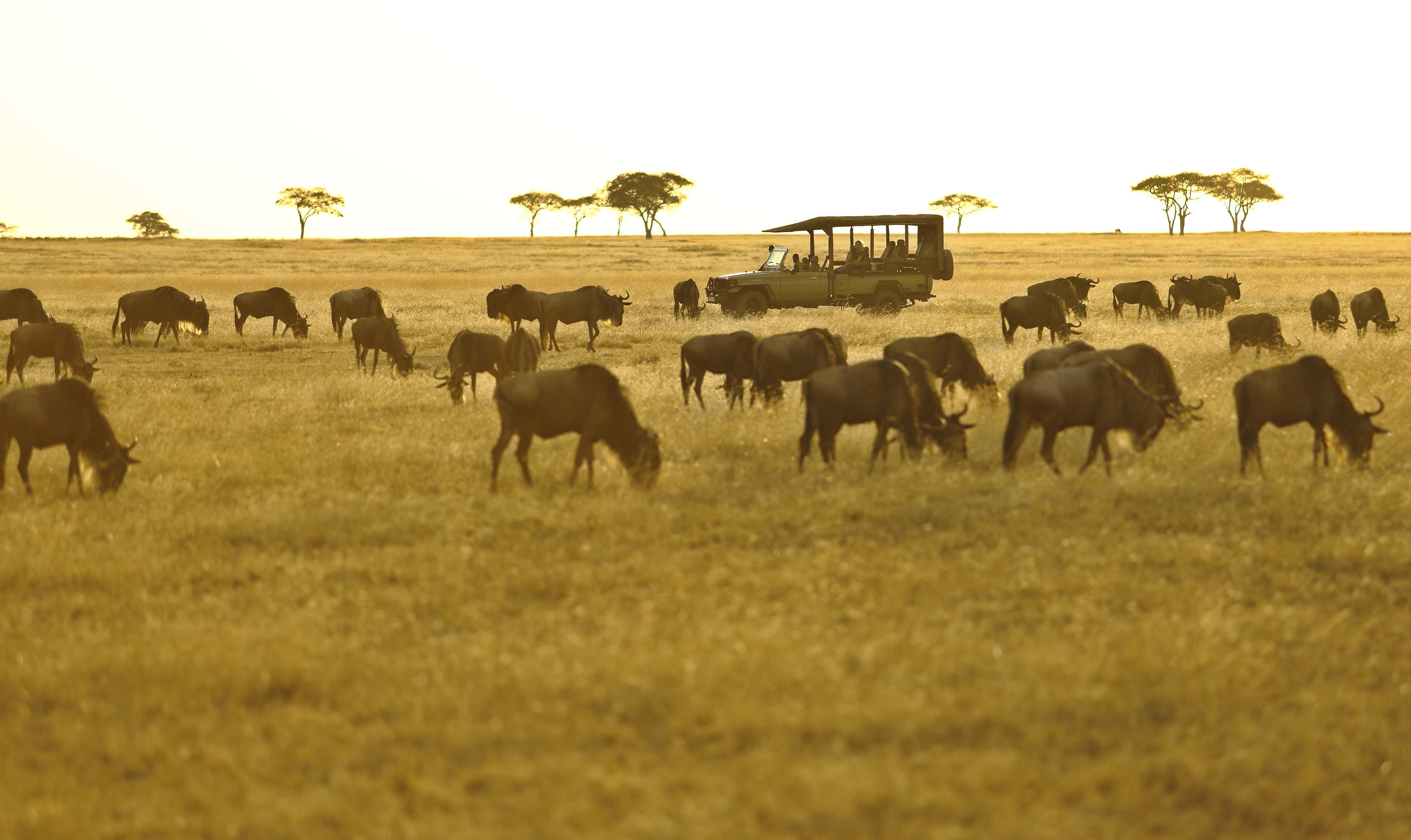
Most “crossing clips” are the final 30 seconds—when the herd commits and the river turns chaotic. The day itself usually looks different: a build-up, a pause, a reposition, then a sudden decision. You can sit at a strong bend for hours with nothing but dust and tension, then the entire scene changes in minutes.
A crossing isn’t one animal jumping in. It’s a chain reaction. One group tests the edge, others gather behind, then the herd pulls back. Sometimes they cross at a quiet place you wouldn’t guess. Sometimes they choose a point you’ve watched all morning—late in the afternoon, when light is softer and the pressure of vehicles changes.
Operator note: the most common disappointment is not “no crossings”—it’s arriving with an expectation of scheduled action. The best experience comes when your route is designed for flexibility, so you can wait on the right day without feeling like you’re “losing time.”
2) How we plan probability (not promises): the three levers that matter
When crossings are your priority, we don’t “promise a crossing.” We design a route that maximizes your chance of being present on the right day. The best plans are built from three levers: corridor, nights, and day structure.
#1 Corridor placement (be in the correct river system)
Crossings are tied to where the herds are holding. If you’re sleeping too far from the river corridor, you can’t respond fast enough. In Tanzania this often means Northern Serengeti (Kogatende) positioning; in Kenya it means a Mara base that lets you reach river zones early without burning half your morning in transit.
#2 Nights-in-zone (time beats luck)
The simplest truth: more nights in the right corridor increases probability. A one-night “touch” is the least effective way to chase crossings, because it turns your safari into a single roll of the dice. If you want a realistic chance, the route should protect 3+ nights in the river corridor.
#3 Day structure (be available when movement happens)
A crossing day is often an endurance day. If your schedule forces you to “leave at 11:00 for a transfer,” you lose your best chance. We plan with flexible timing: early starts, patient waiting, and a calm midday strategy—so you can stay when the herd builds.
Decision shortcut: if crossings matter, don’t spend your budget on extra park names. Spend it on positioning + nights + flexibility. That is what converts “hoping” into a realistic chance.
3) Timing without myths: what matters most (and what doesn’t)
People ask for “the exact crossing week.” That’s not how migration works. Herds move based on grass, water, pressure, and the cumulative drift of thousands of animals. The reliable planning method is not an exact date—it’s choosing the right corridor for your travel window and staying long enough for the right day to arrive.
What really matters
- Correct river corridor positioning for your month
- Enough nights to let probability work
- Day structure that allows waiting and re-positioning
- Early starts (before pressure builds)
What matters less than people think
- Trying to predict a specific crossing “hour”
- Switching camps daily to “cover more ground”
- Chasing radio chatter without a corridor plan
- Assuming one sighting equals daily repeats
If you want the clean month-by-month logic we use, read: Great Migration: Where to Go by Month (Tanzania + Kenya) .
4) Northern Serengeti vs Mara: positioning logic (choose the plan that fits your time)
The Serengeti and the Mara are connected—but your planning should still be time-aware. If you have fewer days, it’s usually smarter to pick one corridor and stay put. If you have more days, you can design a cleaner “two-chapter” plan that respects transfer time and keeps your wildlife hours strong.
Northern Serengeti (Kogatende) — best when you want space and depth
Kogatende planning is about river access and calm rhythm: early starts, long stretches in the corridor, and the ability to return to strong bends repeatedly. It’s ideal when you value the “pattern” of days—because patterns create probability.
Masai Mara — best when you want density and flexible reach
The Mara can feel more compact and high-energy during peak migration periods. Strong planning here is not “drive everywhere”—it’s a base that lets you reach river zones efficiently and manage vehicle pressure with smart timing.
Routing logic: crossings are a probability game. The best advantage is not movement—it’s staying in the correct corridor long enough to catch the right day.
5) A crossing day: the rhythm (and why patience is part of the experience)
The best crossing days are structured around availability. You want to be on the river early, with enough flexibility to wait, reposition, and return. That’s why “short” routes often struggle: they force you into transfers just when the herd finally builds.
- Early start: arrive before pressure builds and choose one or two strong bends.
- Patience window: watch movement, body language, and shifts—herds often “fake out” before committing.
- Midday strategy: keep energy calm—shade, water, a clean lunch plan—so waiting doesn’t feel like stress.
- Late push: some of the most dramatic commitments happen late afternoon when light softens and conditions align.
If you want to understand the daily safari rhythm more generally (wake-up, drives, rest, meals), read: What a Safari Day Actually Feels Like .
6) Access: fly-in vs road (why this decision matters more for crossings)
Crossings are time-sensitive in a different way: not by the clock, but by your ability to be present when herds gather. If road transfers steal your mornings and leave you arriving tired, you lose the calm patience needed for a real crossing day. Fly-in can look expensive line-by-line, but it often buys back the best game-drive hours in the river corridor.
Road access (best when…)
- You have enough days for a steady pace
- You want classic circuit flow without internal flights
- You’re prioritising value over time compression
Fly-in access (best when…)
- You want more river-corridor mornings with less fatigue
- You have limited days and want maximum wildlife time
- You want a calmer, more premium pacing rhythm
For the full time-math logic, read: Fly-in Safaris: When They Make Sense (and When They Don’t) .
7) Who this guide is designed for
- Migration-first travellers who want real expectations and smarter positioning.
- Photographers who understand patience and want the best chance of being present for the decisive moment.
- Couples who want calm planning (and fewer stressful “chase” days).
- First-timers who don’t want myths—just the real operator framework.
- Anyone comparing options between Northern Serengeti and the Mara and wanting a clean logic-based choice.
8) How this fits your wider journey
Migration planning works best when your safari has a clear spine: pick the corridor, protect nights-in-zone, then build the rest of your journey around that foundation. Once crossings are accounted for, you can add the right “soft edges”—a crater finale, a gentler cultural day, or a beach reset—without diluting the migration chapter.
Two practical reads: 6 vs 8 vs 10 Days: Which Length Fits Best? and Safari + Zanzibar: How to Sequence It Properly.
9) Two Afro-Views operator recommendations (built for probability, not pressure)
If crossings are a priority, these are two real route styles we often recommend—one broader (balanced and comfortable), one more specialised (time-first in the river corridor). Both can be tailored to your travel month and comfort level.
10 Days Tanzania Migration Focus (Central Serengeti + Northern Serengeti Depth + Ngorongoro Finale)
Designed for travellers who want migration probability without rushing: enough Serengeti nights to build pattern, then a clean finale that feels like a conclusion. Ideal when you want the “full story” without sacrificing your river-corridor time.
View the itinerary →7 Days Fly-in Northern Serengeti (Kogatende) + Short Serengeti Chapter (Max river time)
Built for travellers who want the best chance per day: fly-in reduces fatigue and protects early river access. This style prioritises being present on the right day—rather than spreading nights too thin across multiple areas.
View the itinerary →For the migration planning overview, start here: Migration Safaris and use: Where to Go by Month.
FAQ: river crossings (calm operator answers)
Do crossings happen every day in peak season?
No. Even in strong migration windows, some days produce no crossings. Herds may hold, drift, or cross at quieter points. That’s why time-in-zone matters more than chasing a single “best day.”
Is it better to stay on the Tanzania side or Kenya side?
It depends on your dates and total trip length. The best plan is the one that keeps you positioned correctly for your window and protects enough nights to let probability work. If you have limited days, choosing one corridor and staying longer is usually stronger than trying to do both.
What should we prioritise for the best chance?
Corridor placement, 3+ nights in the river zone, and a flexible day structure that allows waiting. If you’re short on time, fly-in access can improve your “chance per day” by protecting early river mornings.
Are crossings safe to watch?
You watch from the vehicle and follow park rules and guide ethics. The key is choosing a responsible guide and not pressuring wildlife. A calm approach is better for you and better for the animals.
Can you design a migration safari around our exact dates?
Yes. Share your dates, number of guests, and comfort preference, and we’ll recommend the right corridor and pacing—then build a route that protects time-in-zone and reduces wasted transfers.
Crossing Checklist (Fast)
1) Are we in the correct corridor for our month?
2) Do we have 3+ nights in the river zone?
3) Is the day structure flexible enough to wait?
4) Do we need fly-in to protect early mornings?
Crossings happen when the herd commits—your job is to be there.
Related Reads
Plan Crossings Properly (Calm + Clear)
Share your dates and trip length. We’ll recommend the correct corridor, the right number of nights, and the cleanest pacing to maximise probability—without turning your safari into a chase.
WhatsApp Now →+255 756 100 668
