The simplest Great Migration plan: pick the corridor, then protect the nights
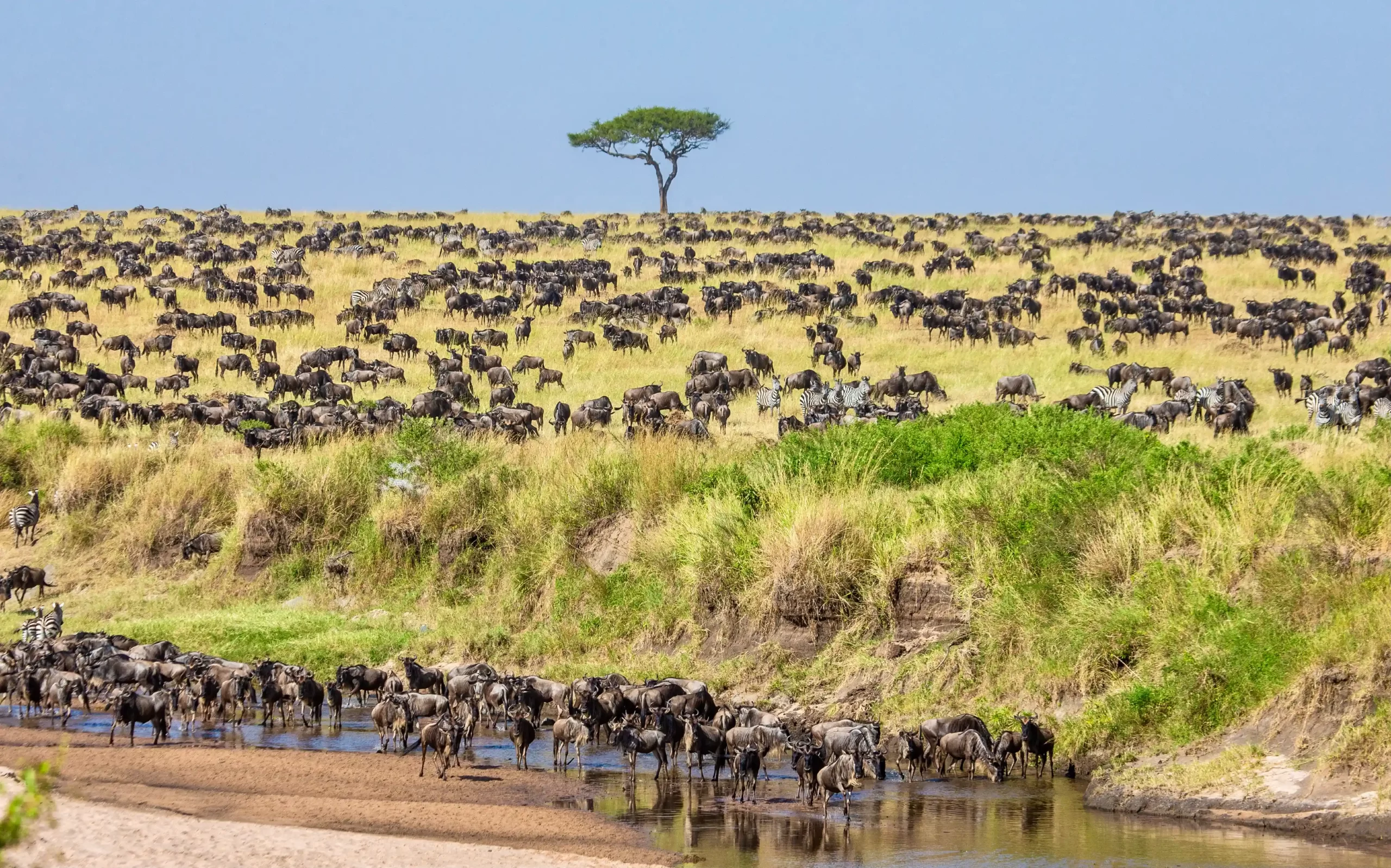
Most migration confusion comes from one problem: people try to plan a moving ecosystem like a fixed event. The Migration doesn’t “arrive on a date.” It responds to rainfall, grass, pressure, and the rhythm of the plains. So the best approach is not to chase headlines—it’s to position correctly by month, then give yourself enough time for the system to reveal itself.
In practical terms, the Migration moves through corridors: Southern Plains (Ndutu) → Central Serengeti → Western Corridor → Northern Serengeti (Kogatende) → Masai Mara, and then back south again. If you’re choosing between Tanzania and Kenya, this guide shows you where to be, when—and what’s realistic.
If you want an operator to translate this into a clean itinerary, start with our hubs: Migration Safaris • Tanzania Safaris • Kenya Safaris.
In this guide
1) Quick summary: where to go (by month)
| Month | Best positioning | What’s realistically strong | Planning note |
|---|---|---|---|
| Jan–Mar | Ndutu + Southern Plains (Tanzania) | Calving season, predators, big cats | Best for drama + newborn season; book early |
| Apr–May | Central Serengeti + Western Serengeti | Green season, fewer vehicles, value | Weather can vary; focus on comfort + pacing |
| Jun–Jul | Western Corridor → moving north | Long lines, movement, early river drama (Grumeti) | Don’t over-promise crossings; protect nights |
| Aug–Sep | Northern Serengeti (Kogatende) + Masai Mara | Best probability for Mara River crossing windows | Peak season crowds—fly-in helps |
| Oct | Central Serengeti (Seronera) + corridor edges | Excellent big cats + resident wildlife | A safe month for first-timers (less pressure) |
| Nov–Dec | Central → Southern Serengeti (transition) | Fresh grass, quieter feel, strong photography light | Positioning matters more than “tick-list routes” |
If you only remember one thing: choose the corridor first, then stay long enough for the ecosystem to perform. That’s how we design migration safaris that feel calm—without gambling on a single “crossing day.”
2) Great Migration month-by-month (Tanzania + Kenya)
January–March: Ndutu + Southern Plains (Calving season, Tanzania)
This is the most misunderstood “migration window” because it’s not about a river—it's about new life. Herds concentrate on the Southern Plains and Ndutu for grazing, and the predator story becomes intense: lions, cheetah, hyena, and opportunistic hunting patterns are common. If you want big-cat depth and dramatic behaviour, this is often the strongest season.
Operator note: plan multi-night stays around Ndutu so you’re not moving every day. Calving is about repeated mornings in the same zone—patterns build, and sightings improve.
April–May: Central Serengeti + Western edges (Green season value)
Rainfall varies year to year, but this is often when the Serengeti feels wide and quiet—excellent for travellers who dislike crowds. Wildlife is still strong, and photography light can be beautiful. The “migration” may spread out; your best advantage becomes good guiding and smart daily rhythm, not chasing distance.
Planning note: if your comfort priorities are high, select properties with strong all-weather logistics and calm service. The goal is a smooth experience—this is where route design matters more than headlines.
June–July: Western Corridor → moving north (Grumeti region, Tanzania)
This period is often about movement and momentum. Herds trend north, and the Western Corridor can be strong depending on grass and rainfall. Some seasons deliver dramatic river moments at Grumeti; others are quieter. Your best result comes from choosing a corridor and keeping enough nights to catch “the wave” as it passes.
Operator note: don’t design your whole trip around one crossing. Design it around daily probability: strong mornings, strong guiding, and enough time in the right geography.
August–September: Northern Serengeti (Kogatende) + Masai Mara (Peak probability)
This is the best window for travellers who specifically want river-crossing probability. Position in Northern Serengeti (Kogatende) and/or the Masai Mara, then stay long enough for a realistic chance. Crossings can happen quickly, unpredictably, and not always where you expect—so time-in-zone is the strategy.
Planning note: peak season means pressure: crowds and limited inventory. If you want a calmer experience, consider fly-in access to protect game-drive time and reduce fatigue.
October: Central Serengeti (Seronera) as the safest all-round plan
If your priority is excellent wildlife without obsessing over exact migration positioning, October is a strong choice. Central Serengeti offers consistent big cats and resident wildlife year-round. It’s a clean month for first-timers: strong sightings, less pressure, and easier route logic.
Operator note: this is where extra nights truly change the trip. With repeated dawns in one zone, sightings become deeper and more relaxed.
November–December: Transition south (quiet beauty, strong photography)
This is a planning season. Herds begin shifting toward fresher grass and southern zones, but the exact pattern varies. The big win is atmosphere: softer light, fewer vehicles, and a calmer Serengeti feeling. If you value elegance over spectacle, this can be a beautiful time to travel.
Simple rule: choose your month → choose your corridor → protect 3+ nights in that corridor. That’s how you avoid “chasing” and end up with a migration safari that feels effortless.
3) Why corridor logic beats “crossing hunting”
“Crossing hunting” is what happens when an itinerary has one fragile objective—be at one river bend at the right minute. The problem is that the ecosystem doesn’t cooperate with human schedules. Instead, we plan around corridors and time-in-zone: if you are in the right geography with enough nights, the ecosystem has multiple chances to deliver.
This is why the best migration safaris often feel calm: they are designed to be good every day, not only on the day you’re “lucky.” If you want deeper context, also read: River Crossings: What to Expect.
4) Access & logistics: fly-in vs road (what actually changes)
Migration planning is not only about wildlife—it’s about protecting your best hours. In peak months, long transfers can quietly steal your prime morning and late-afternoon game drives. This is why fly-in routing can be one of the most valuable upgrades: it keeps your trip focused on the corridor, not the road.
Road routing (best when…)
- You want a classic Northern Circuit flow
- You enjoy landscapes + slower travel
- You’re balancing budget and comfort
Fly-in routing (best when…)
- You want more Serengeti dawns
- You’re targeting the Northern corridor
- You want less fatigue and cleaner pacing
If you’re choosing between the two, read: Migration Safari: Fly-in vs Road.
5) Who this guide is designed for
- First-timers who want a clean decision framework (without contradictory advice).
- Repeat travellers who want better positioning, fewer crowds, and more depth.
- Couples who want a calm rhythm—time for sunsets and private moments, not stress.
- Families who need sensible pacing (multi-night stays, fewer long transfer days).
- Photographers who understand that light + time beat luck.
6) Costs & value: the variables that move your total
Migration safaris price differently because the best corridors are seasonal and inventory is limited. The biggest cost drivers are: peak months, corridor location, lodge category, and access method (fly-in vs road). If you want the trip to feel premium without overspending, the best value move is often more nights in the right zone before chasing the most expensive room category.
- Group joining safaris (Tanzania/Kenya): typically $200–$500 per person per day
- Private safaris (midrange → luxury → high-end): typically $400–$3,500 per person per day
- What changes your total most: season + camp location + internal flights + number of nights in the corridor
For deeper transparency, read: Safari Costs Explained.
7) How this fits your wider journey
If you’re planning more than just the Migration, the cleanest add-ons are the ones that protect your energy: a short cultural day (when appropriate), a crater finale, or a beach reset after safari. The key is sequencing—don’t interrupt the corridor with too many moves.
Two helpful next reads: Tanzania Northern Circuit Route Logic and Safari + Zanzibar Sequencing.
8) Two Afro-Views operator recommendations (built from this logic)
If you want us to translate the month-by-month positioning into a clean route, these are two real styles we recommend—one broader, one more specialised. We can customise both based on your month, comfort level, and whether you prefer Tanzania-only or Tanzania + Kenya.
10 Days Tanzania Classic + Migration Positioning (Serengeti depth + crater finale)
Built for travellers who want the Migration story and a complete Northern Circuit rhythm—Tarangire as a powerful opening, deep Serengeti time in the correct corridor for your month, then a proper Ngorongoro Crater day to close.
View the itinerary →7 Days Fly-in Northern Serengeti + Mara River Focus (Aug–Sep logic)
Designed for travellers with a narrow goal: maximise northern corridor time and reduce transfer fatigue. It’s not about promising crossings—it’s about staying in the right geography long enough for the river story to happen naturally.
View the itinerary →Prefer Kenya-heavy routing? Start here: Reserve vs Conservancy Explained.
FAQ: Great Migration planning (no hype)
Is it better to do Tanzania-only or Tanzania + Kenya?
Tanzania-only gives you the full Serengeti ecosystem and clean route control. Adding Kenya can be excellent if your month aligns and you want the Mara experience—but cross-border planning must protect time-in-zone so it doesn’t become a transfer-heavy trip.
How many nights should we stay in Northern Serengeti in Aug–Sep?
For real probability, we typically advise 3–4 nights in the northern corridor. One night is rarely enough—migration is a rhythm, not a snapshot.
Can you build this into a private safari with our own guide?
Yes—private guiding is ideal for migration because it gives you flexible timing, calmer sighting strategy, and better day structure. Tell us your month, number of nights, and lodge level and we’ll match you to the correct corridor.
Quick Migration Plan
Step 1: Choose your travel month
Step 2: Match the corridor (Ndutu / Central / North / Mara)
Step 3: Protect 3+ nights in that corridor
Positioning beats chasing.
Related Reads
Plan My Migration Safari
Tell us your month, trip length, and lodge level. We’ll recommend the right corridor and build a calm, high-probability route.
WhatsApp Now →+255 756 100 668
